
Fernley Previous Residents Sources
No one file lists every past resident of a Fernley address. The Recorder is the strongest office for ownership transfers. The Assessor builds the parcel and owner trail that anchors a resident lookup. City and county permit files can date work on a property. They do not always name who lived there, though. Newspapers, old city directory volumes, and census schedules can place people at an address or within a locality. Coverage is selective, however. Treat the years below as access facts rather than a promise. No single source holds every Fernley street.
| Source | Years It Covers | Where Held | What It Shows |
|---|---|---|---|
| Recorder images | 1970 to present stated; pre-2000 image limitation | Lyon County Recorder | Recorded instruments, parties, legal descriptions, recording dates |
| Recorder index | Instructions demonstrate at least 1982; exact start not stated | Lyon County Recorder Self Service Web | Grantor, grantee, document and placement fields |
| County permits | Building records from 1969 | Lyon County Community Development | Construction and property-record context |
| Planning and zoning | Begins 1971 or 1972 | County Community Development | Land-use and planning history |
| Federal census | 1790 to 1950 public by name | National Archives / genealogy repositories | Enumerated household snapshot |
| FamilySearch marriages | Lyon images 1861 to 1960 | FamilySearch | Historical marriage lead, not a current certificate |
Municipal records are a late layer here. Fernley incorporated in 2001. Separate municipal court operations began in 2002. So a pre-incorporation city file does not exist, and a current Fernley address should never imply one. Sanborn map years for Fernley are not listed in standard references, so confirm coverage through the Library of Congress or a map catalog before relying on a date.
Freeze a Fernley Parcel First
Start with the current parcel, not a guessed old house number. The Lyon County Property Appraiser Records Search supplies the APN and situs. It also gives the assessed owner, legal owner context, mailing address, legal description, and vesting document clues. Copy the APN twice. Keep the formatted version shown in current GIS. Keep the undashed form that older recorder instructions expect. The legal description matters too. A subdivision lot, a section-township-range description, or a metes-and-bounds parcel stays identifiable even after a street number changes.
Keep three address layers separate. The situs is the physical location. The tax mailing address is where correspondence goes. The APN and legal description identify the land itself. A mailing value can point away from Fernley and still be valid for tax records. An owner name, likewise, proves nothing about who occupied the house. Past residents require their own evidence from directories, census schedules, newspapers, or other dated sources.
- APN
- The assessor parcel number that links tax, GIS, and property records.
- Vesting document
- The recorded instrument that helps explain how title was held or transferred.
- Legal description
- The land description in a recorded document, usually more durable than an old street address.
Follow Lyon Recorder Transfers
The backward deed method starts with today's parcel. It steps from one recorded transfer to the one before it. Lyon's Recorder asks searchers to enter indexed names last name first, then first name, paired with an approximate recording date. A recorded transfer names the parties to land, not automatically every resident. Even so, it builds the owner sequence. That sequence carries a house history through time without leaning on a street number alone. It makes the recorder index a natural partner to any Fernley residents directory search.
- Pull the current APN, legal description, owner context, and vesting clue from the assessor record.
- Search the Lyon County Recorder Self Service Web for the current owner’s acquisition and compare document type, recording date, APN, and legal description.
- Read the seller, or grantor, in that acquisition document.
- Search that seller as a grantee to locate the earlier purchase, then repeat the comparison.
- For an older missing image, request the record or use the counter instead of filling the gap with a guess.
Lyon Recorder online-record guidance walks through the grantor and grantee search path and lists every request option. That official page pairs well with a deed trail because it states the county's own access rules.
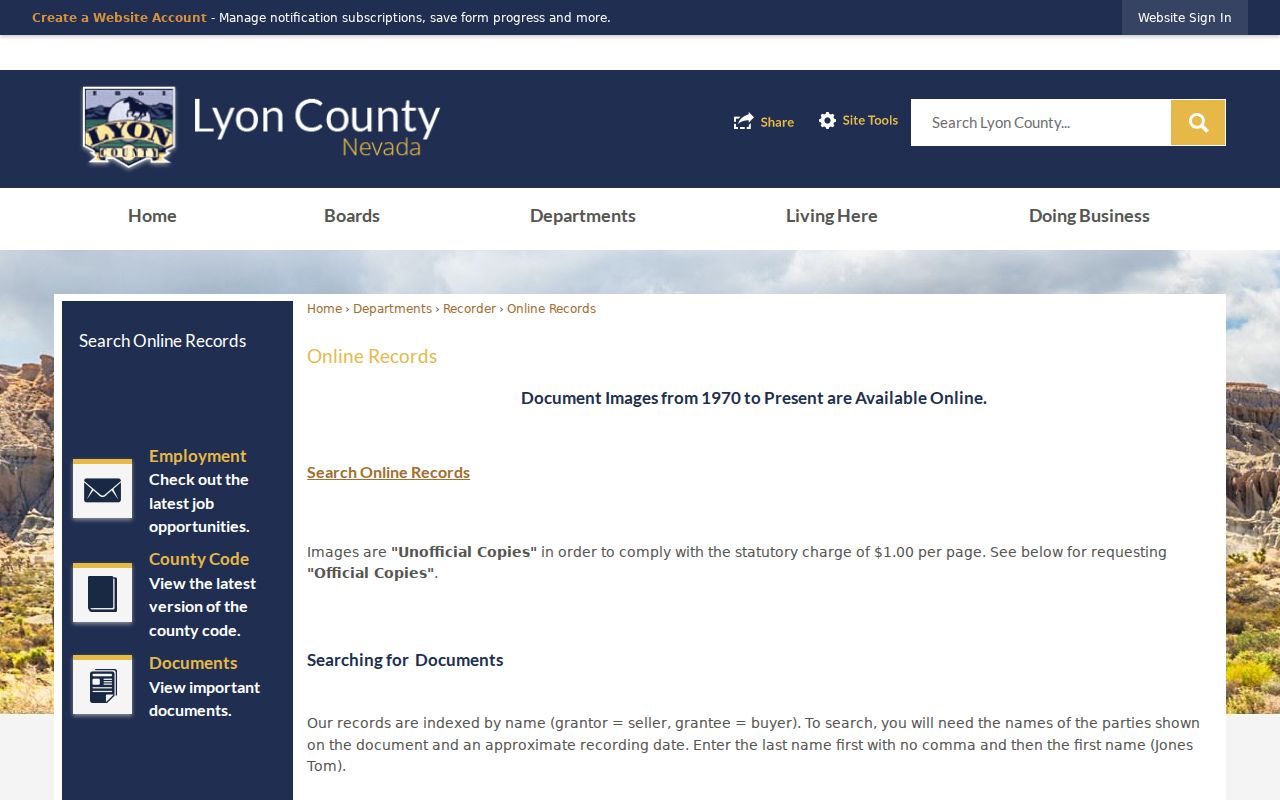
Grantor means the party giving up an interest. Grantee means the party taking it on. A chain of title strings those recorded transfers together, and it traces a property rather than a household.
Fernley Recorder Image Limits
Lyon County publishes document images from 1970 forward. Yet its own instructions note that pre-2000 documents cannot be viewed online yet. So the image gap is real. The index still carries plenty of detail. Expect a name, document number, document type, recording date, book and page, section-township-range, parcel number, subdivision, or description. An index hit does not mean the image will open. A missing image is not a missing deed. Online images are unofficial. Official copies run $1 per page, plus $4 for certification. When staff run a search, the Recorder charges $10. Requests come in by email, phone, fax, online form, or in person. At those prices, a clerk beats any third-party deed-copy pitch. Include the document number and exact property description so retrieval lands on the right record.
Older-record step. Ask the Recorder whether the index, a counter copy, or another retrieval route is available for an image that will not open online. Do not claim a transfer’s contents from an index alone.
Fernley Three-Clock History
Property history reads best when three dates stay separate. The deed clock is the recording or transfer date. The directory clock is when a name or address appears in print. The census clock is the official enumeration date. These clocks can disagree with no error anywhere. A sale may precede a move, and a printed listing can lag behind it. A permit adds a fourth clock, one for construction rather than arrival. The city's records page opens onto the Archive Center and the Document Center. It also covers the fee schedule and the Clerk request route. It serves questions about city-held administrative or building history. For house histories, though, Fernley publishes no database of residents by address.
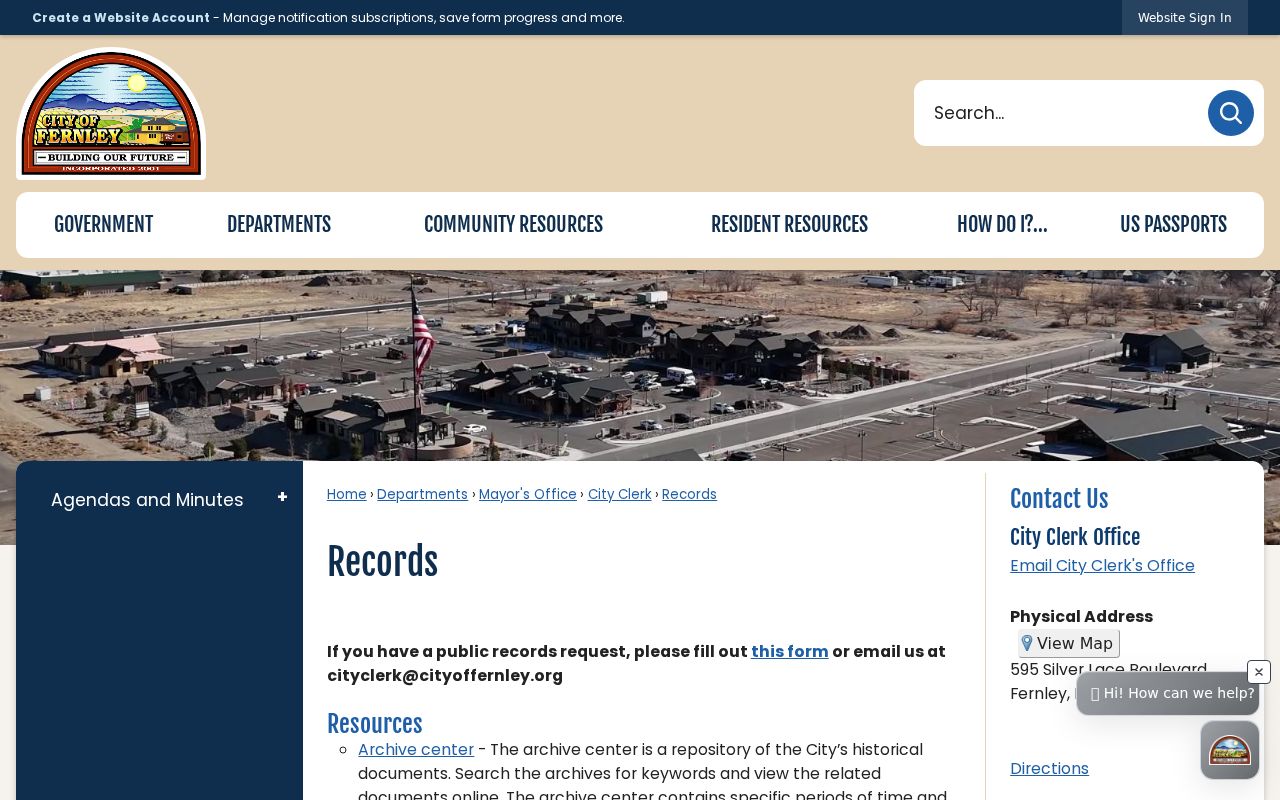
Permits tell you about buildings, not households. The Fernley Online Permit Center lists a permit number, record type, address, filing date, and expiration. It also shows the status for each request. County development files go further. They cover site plans, septic work, floor plans, land-use, zoning, and code records.
Read together, these records show what work happened on a property. They also show when officials acted on it. They are not a roster of past residents. So treat them as one thread in a broader Fernley residents directory search.
Fernley Past Residents in Print
Property rolls and deeds tell you who owned a place. They rarely tell you who lived there. Printed sources fill that gap. Fernley has no known city-directory or reverse-directory run, but newspapers help. UNLV lists the Fernley Enterprise for just two dates: December 6, 1919 and February 7, 1920. The Lyon County Leader-Courier ran from January 2, 1985 to September 9, 1987. Fernley Leader/Dayton Courier followed from September 23, 1987 to August 3, 1988. A wider listing started August 17, 1988. Tri-County Express covers September 9, 1988 through December 22, 1992. Those windows are narrow, so a past-residents search leans on other resident lookup tools.
The federal census is the strongest of those tools. Under the 72-year rule, schedules through 1950 are open to anyone. Match 1900, 1910, 1920, 1930, 1940, or 1950 entries with deed dates and newspaper mentions. Copy the locality label exactly as the enumerator wrote it. The Fernley city directory collections page walks through the regional library and newspaper paths in more depth. FamilySearch holds Lyon marriage images from 1861 to 1960, which can anchor an event. One caution: a marriage image never places a couple at a specific address without a second record. It needs a second record.
Obituaries, cemetery records, and probate files close many trails. A person moved, then died, then left a paper trail. When a result truly matters, confirm the name and date against a county, court, or vital source. Note: no published Fernley Sanborn run exists. Assign no Sanborn year to an address without catalog evidence.
Lyon Records History Matters
Old Lyon County records come with a caveat. The county dates to 1861, with Dayton as its first county seat. The Dayton courthouse burned in 1909. Yerington took over as county seat in 1911. That fire is a real continuity warning for very old research. The county publishes no full account of which record groups were destroyed or rebuilt. So it would be wrong to claim that every deed, court book, or file went up in smoke.
Fernley follows its own clock. It began as a railroad locality. It formed a town board in 1985, incorporated on July 1, 2001, and opened its own municipal court in 2002. A search for early residents may run through county, railroad, agricultural, or township sources. It may not lead to a city archive. The 2005 boundary shift that put Fernley wholly inside Lyon County also matters. Earlier material may sit with Washoe County instead.
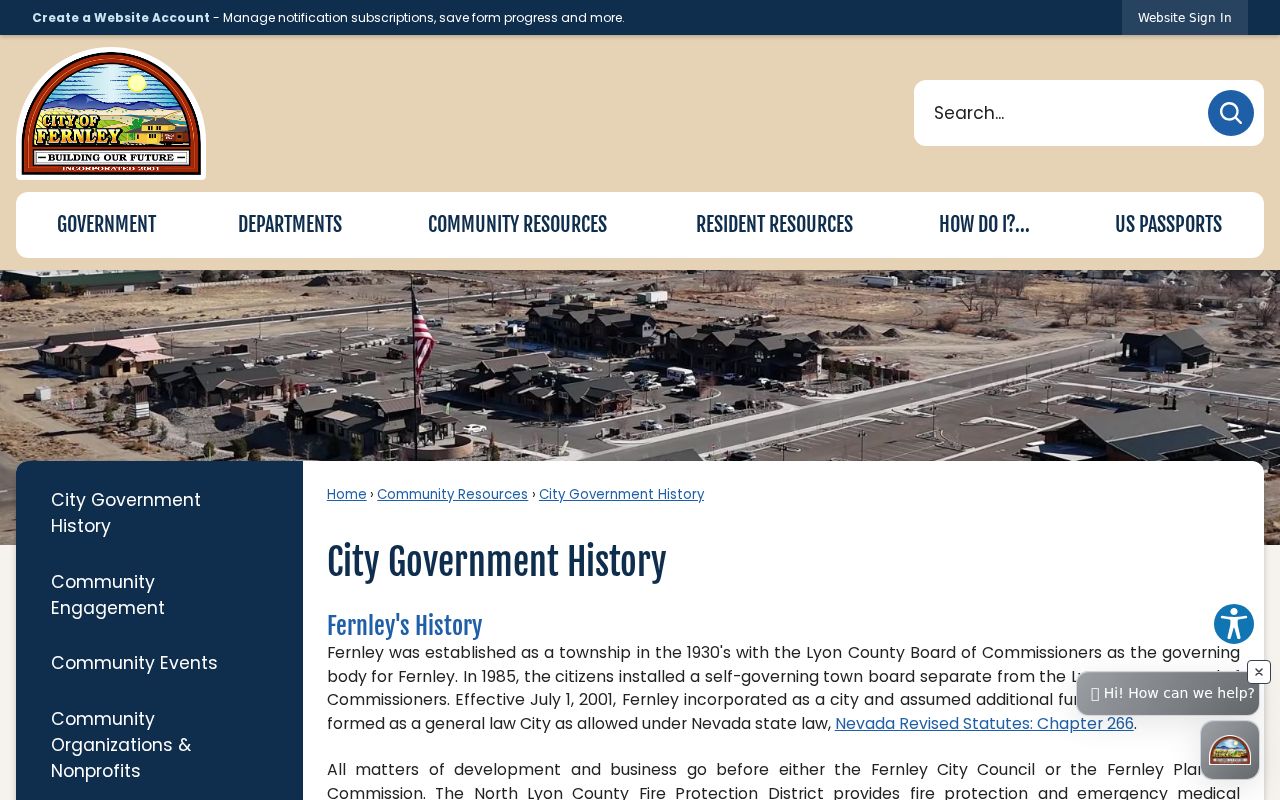
Fernley's government-history timeline lays out those municipal milestones. It frames how the city's current records came to be. It does not read them backward in time.
Keep a dated log as you go. Note whether each record is Lyon, Washoe, city, township, or railroad-era material. That small habit makes any future review of past residents far more accurate.
Fernley Address Names Before Cityhood
Fernley first appears in Southern Pacific employee timetables in 1904. Telegraph and wye facilities show up by 1905. Yet city and residential materials cite 1904 or 1906 as founding milestones. Treat those as separate facts. Forcing one artificial date only muddies a resident trail. The depot dates are firmer. It was built in 1914, retired in September 1985, and moved to Main Street in January 1986. Because of that railroad past, an older street directory search may surface station, canal, rural-route, township, or irrigation labels. Those appear instead of familiar addresses.
When a current address returns nothing historical, widen the net. Search Fernley alongside station, township, county, Newlands Project, Truckee Canal, and known surname variants. The canal and railroad explain the geography. They cannot identify a household on their own. For family or house history, the soundest result is a dated sequence of independently sourced records. Never rely on a single reconstructed occupant list pulled from a residents directory or parcel file alone.
Lawful personal use. Previous-residents research is for house history, family history, estate questions, and personal curiosity. Never use an old address trail to track, harass, or intimidate a living person.